

Commercial HVAC, Solar Energy & Fit-Out Solutions
Commercial HVAC, Solar Energy & Fit-Out Solutions
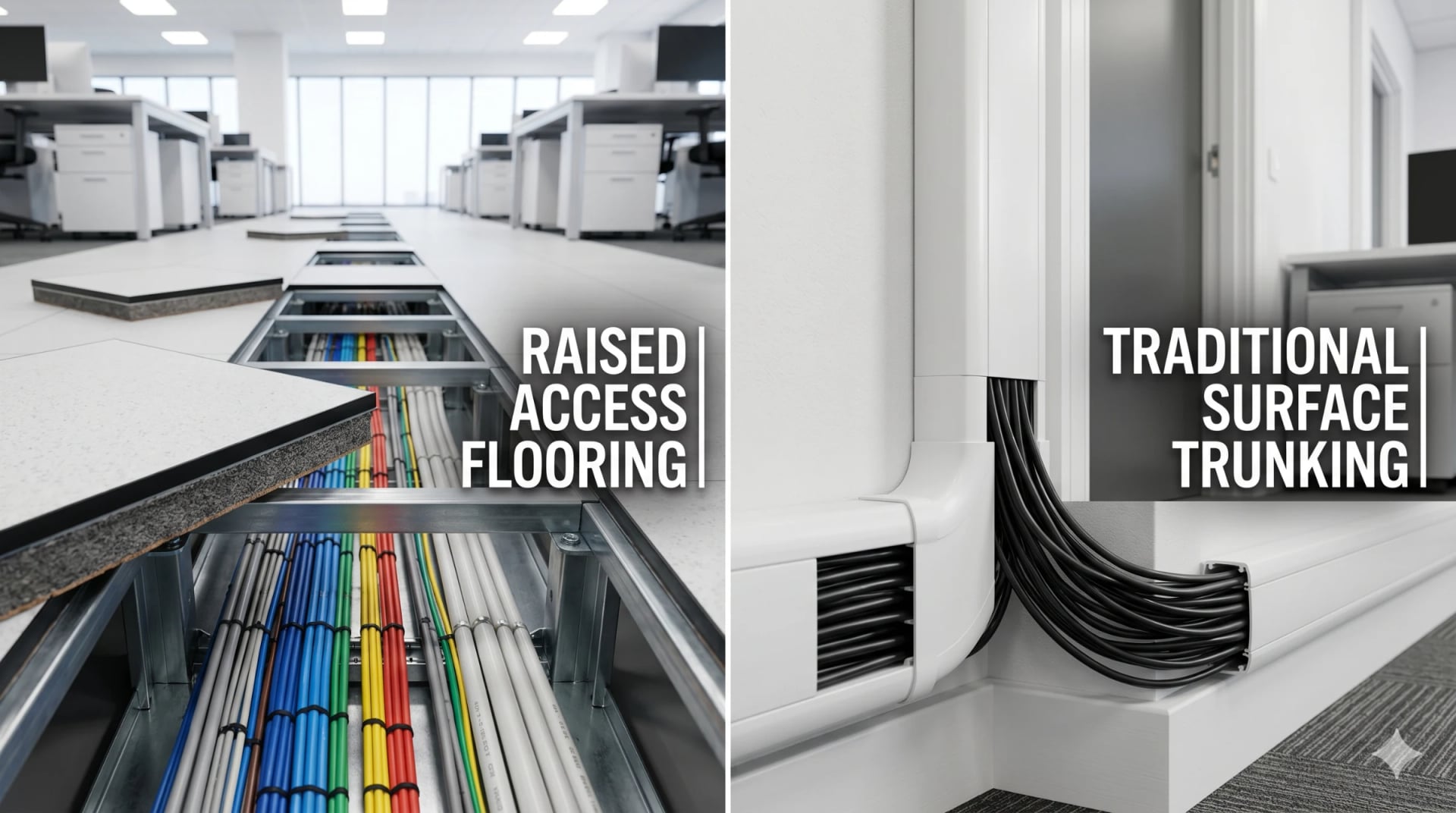
Tired of messy wires and tripping hazards choking your office layout? Compare the total spatial adaptability of Raised Access Flooring against the budget-friendly simplicity of Traditional Surface Wall Trunking with ETCBangladesh to power your business smoothly.
When building out a new corporate headquarters or banking wing in Dhaka’s core financial sectors like Motijheel, Kawran Bazar, or Gulshan, much of the structural focus lands on eye-level aesthetics—the glass partitions, the sleek modular desks, or the high-end ceiling arrays. Yet, the absolute lifeline of any modern business is its invisible data and electrical infrastructure.
With data-driven operations demanding continuous ups setups, high-speed fiber-optic links, and multi-screen workstations, an office can quickly become choked by an untamed jungle of messy cabling.
Failing to plan your wire routing correctly creates a double penalty: it introduces a massive fire and tripping hazard, and it severely restricts your ability to change your office layout when your team scales. To manage this high-density infrastructure, corporate space planners must select a foundational routing methodology: Modular Raised Access Flooring Systems or Traditional Surface-Mounted Wall Trunking. At ETCBangladesh, we look beneath the surface to engineer a neat, future-proof power backbone for your space.
Raised access flooring—as visually labeled on the left side of our design guide—utilizes a raised structural grid of adjustable steel pedestals fastened directly to the concrete subfloor, supporting removable, heavy-duty modular floor panels.
The primary operational advantage of a raised access floor is the creation of a massive, hidden service void right beneath your feet. All electrical mains, local area network (LAN) cabling, telephone wires, and even specialized Underfloor Air Distribution (UFAD) climate ducts run cleanly through this open underground chamber.
If your company decides to completely shuffle its floor plan next year—moving a 20-person operations cluster from the east wing to the west wing—your IT team doesn't need to break down walls or drop new ceiling drops. They simply pop open the specific modular floor panels, reroute the wires under the floor grid, and install a flush-mounted floor power box exactly where the new desks sit.
From a premium design standpoint, raised access flooring keeps your entire architectural footprint completely clean. There are zero visible conduits climbing up structural columns, zero plastic casings running along walls, and zero trailing extension cords cutting across walking paths.
The modular panels can be seamlessly finished with high-traffic carpet tiles (refer to our Carpet Tiles vs. Concrete guide) or luxury vinyl planks (LVP), ensuring your workspace looks completely uncluttered, elegant, and high-end to visiting investors.
Traditional surface trunking—visually labeled on the right side of our design guide—utilizes rigid, surface-mounted PVC or aluminum channels fastened directly along baseboards, office walls, and vertical structural columns to encase wires.
The defining commercial advantage of surface wall trunking is its exceptional budget friendliness. For small-scale local offices, retail banks, or properties running on short-term building leases, installing a full raised floor can sometimes be a capital-intensive overkill.
Wall trunking leverages your existing concrete floor slabs without altering building heights. It uses highly economical local materials and standard labor, allowing your electrical team to clip, stick, and route cables rapidly across an entire floor plate in a matter of days.
Because surface trunking sits completely exposed along the room perimeter, it offers total accessibility for technical maintenance. If a specific networking line fails or a circuit breaker trips, your IT staff can easily pop off the plastic clip-on cover of the trunking channel, trace the wire visually, and fix the fault or add a new outlet line instantly, without needing to lift furniture or open floor grids.
However, because it forces your furniture to sit strictly against the walls where the outlets are fixed, it can significantly limit your open-plan layout flexibility.
Performance & Logistic MetricModular Raised Access FlooringTraditional Surface Wall TrunkingVisual Footprint100% Invisible (All cables hidden completely underfloor)Highly Visible (Plastic/metal casings track along walls)Layout FlexibilityMaximum (Outlets can be positioned anywhere on the floor)Restricted (Furniture must cluster near wall outlets)Future Reconfiguration CostLow (Fast, clean, non-destructive wire shuffling)High (Requires buying new channels, drilling, and repainting)Impact on Room HeightShaves off 4 to 8 inches of vertical headroomAbsolute Zero (Maintains original ceiling height)Initial Capital InvestmentHigh (Requires specialized metal grids and floor tiles)Extremely Low (Highly economical material and labor)Ideal Operational ZoneServer rooms, trading floors, and high-density tech hubsLinear back-offices, call centers, and leased properties
Before committing to a raised access flooring system, a crucial structural metric must be verified: the slab-to-beam clear height. Older commercial buildings in areas like Motijheel or Dhanmondi often feature lower ceiling clearances. Dropping a false ceiling from above to hide HVAC ducts (see our Exposed vs. False Ceilings post) while simultaneously raising the floor by 6 inches from below can leave you with a cramped, low-clearance space.
For new, premium glass towers in Gulshan or Banani that feature generous 11-to-12-foot raw slab heights, a raised floor system is highly recommended. It works beautifully to future-proof your tech real estate asset, ensuring you can scale your data networks effortlessly for the next 20 years.
Managing the intersection of dense IT infrastructure and premium workplace aesthetics requires precise load-bearing calculations, data frequency isolation, and advanced spatial planning.
At ETCBangladesh, our commercial interior design division seamlessly coordinates architectural 3D layout drafting with structural electrical engineering, network cabling termination, and certified on-site project deployment. We turn raw commercial shells into clean, highly organized, and adaptive business ecosystems built for continuous growth. Contact ETCBangladesh today to evaluate your upcoming office fit-out and design an environment engineered for operational success.
Continue Reading
Keep the reading flow going without dropping straight into the footer.
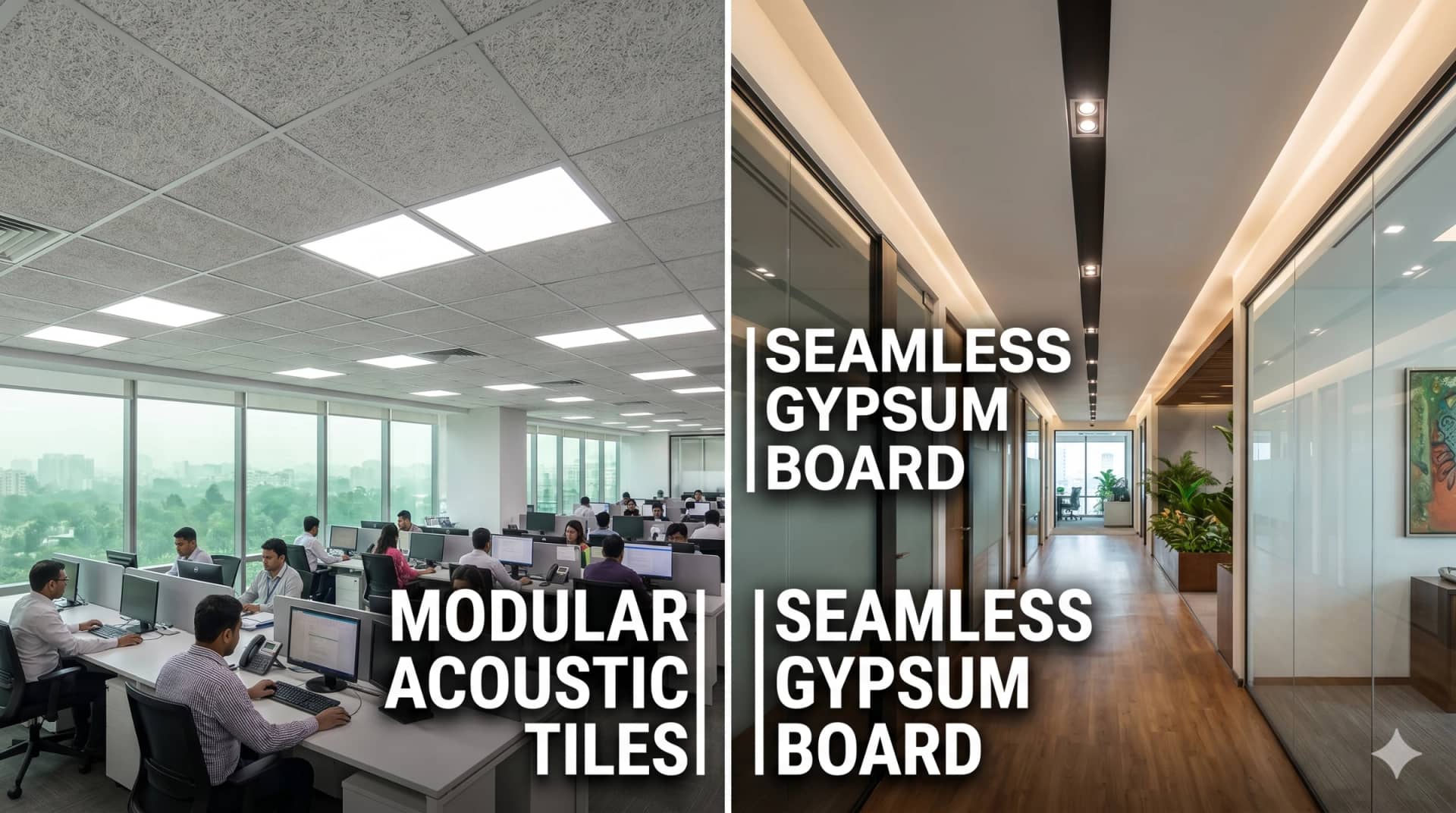
Does your office ceiling prioritize ease of maintenance and acoustic focus, or uncompromised minimalist elegance? Compare the technical logic of Modular Acoustic Tiles versus the smooth sophistication of Seamless Gypsum Ceilings with ETCBangladesh.
Read next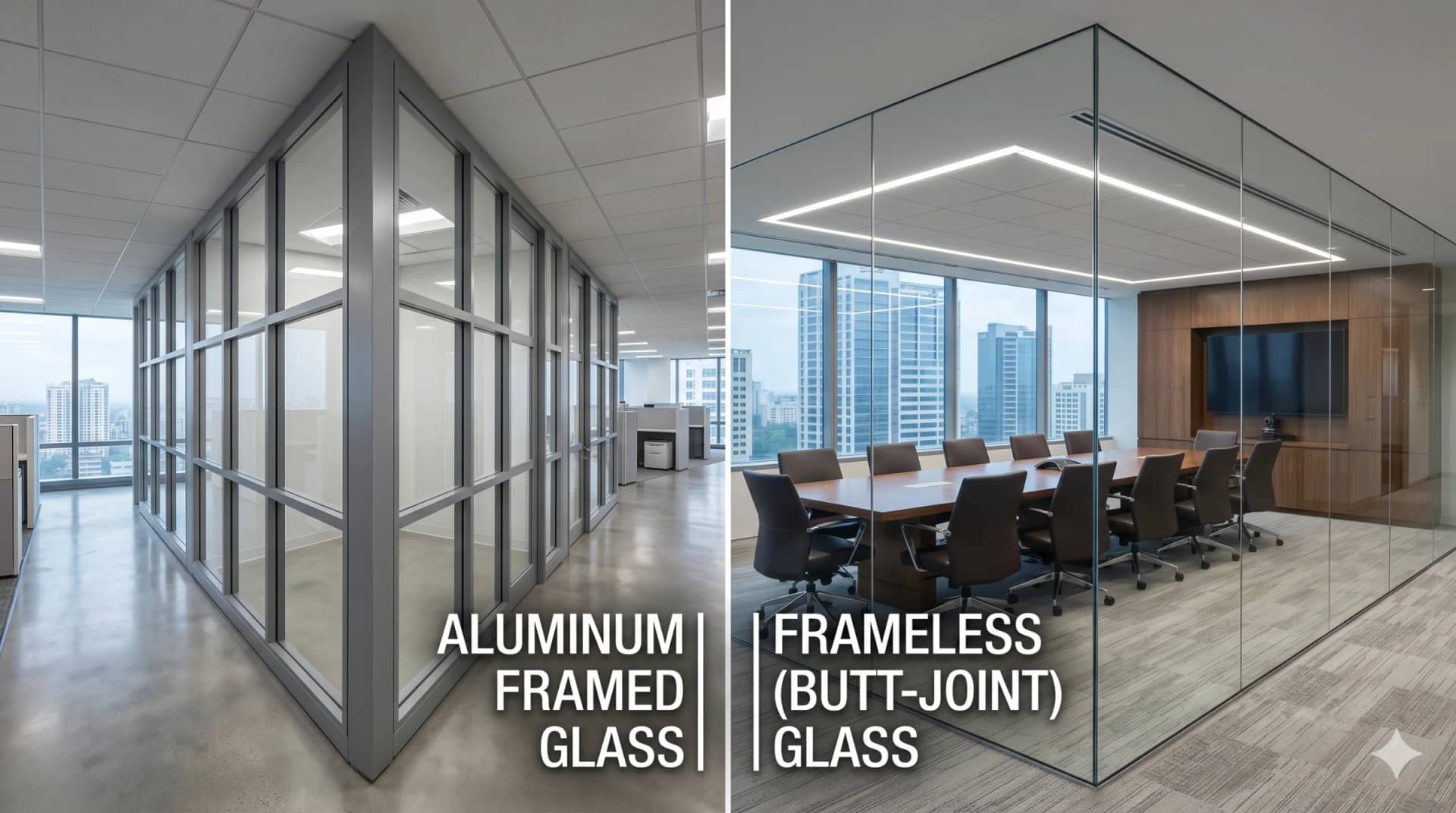
Are you dividing a collaborative tech floor or a prestigious executive wing? Compare the structural rigidity, acoustic performance, and long-term capital efficiency of Aluminum Framed Glass Partitions versus sleek Frameless Glass with ETCBangladesh.
Read next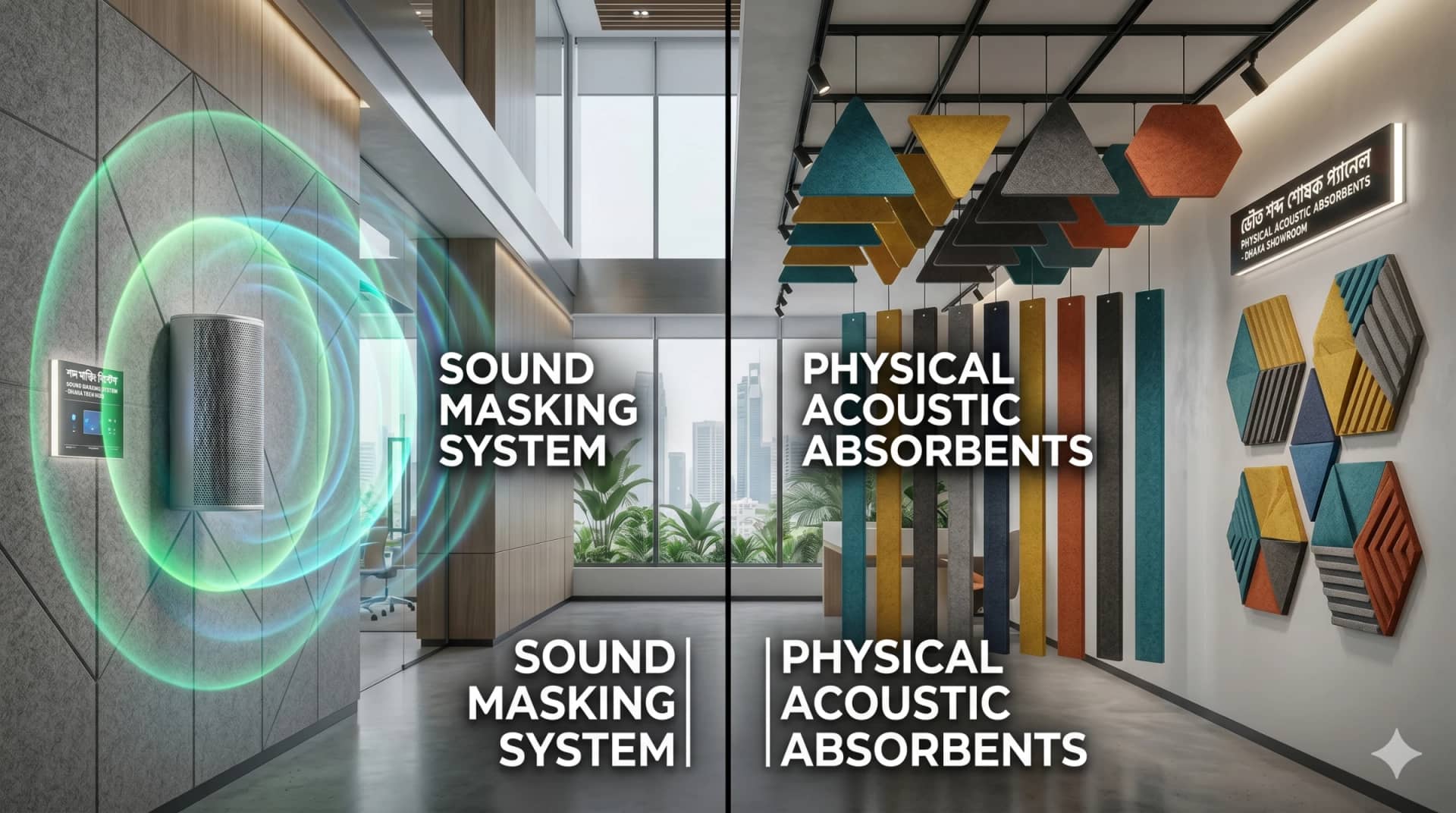
Open-plan layouts in Dhaka are suffering from a noise crisis that destroys concentration. Compare the engineering logic of Sound Masking Systems (Digital White Noise) against traditional Physical Acoustic Panels and Baffles with ETCBangladesh to build a silent, high-performance office.
Read next