

Commercial HVAC, Solar Energy & Fit-Out Solutions
Commercial HVAC, Solar Energy & Fit-Out Solutions
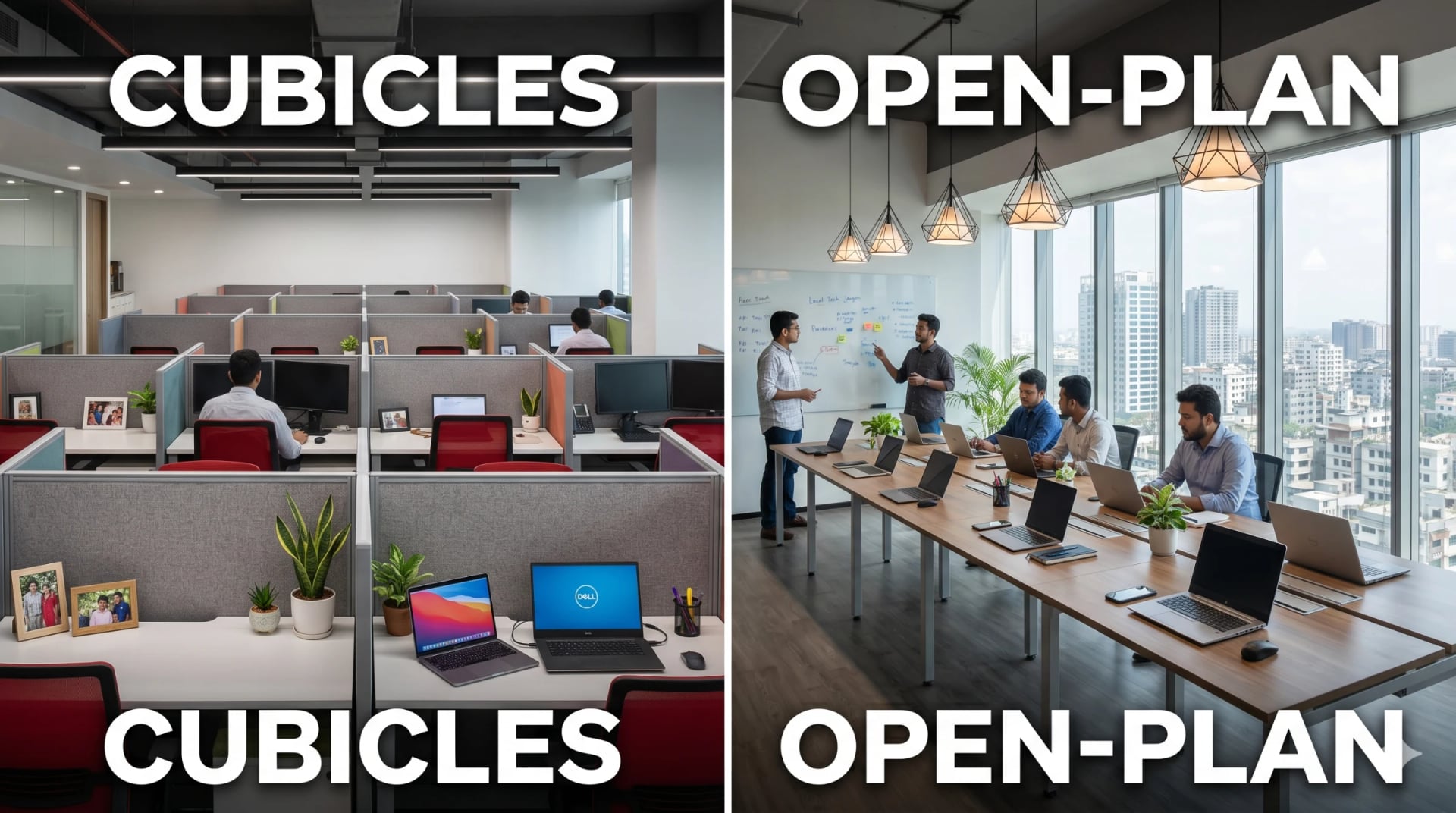
The fundamental debate of modern office design: visual focus versus collaborative energy. Compare the concentrated privacy of traditional Cubicle Workstations against the synergistic dynamic of Open-Plan configurations with ETCBangladesh.
When engineering a multi-megawatt industrial solar array, the choice of components often defines your financial trajectory for decades. The same critical importance applies to configuring the physical layout of your corporate headquarters in Dhaka’s premium districts like Gulshan, Banani, or Motijheel. The floor plan you deploy dictates your company’s maximum headcount density, sets the baseline for daily ambient noise, and fundamentally shapes your corporate culture.
The central conflict in corporate interior architecture has long been centered on Cubicles (Structured Workstations) versus Open-Plan (Benching Systems). Choosing purely based on minimizing upfront costs can burden your operations with a disjointed workforce that cannot concentrate, while prioritizing visual flash can lead to an office floor that is acoustically hostile to deep, technical output. At ETCBangladesh, we look past the furniture catalogs to analyze your specific departmental workflows, designing a spatial matrix built for performance.
Cubicles—visually labeled on the left side of our design guide—utilize standardized modular panels to create private or semi-private enclosures for individual workers.
The primary advantage of a cubicle layout is its absolute structural focus on individual productivity. In an increasingly connected world, employees tasked with finance, legal, complex software coding, or strategic writing require high concentration and minimal visual distraction. Cubicle walls act as visual shields, blocking the "ambient chaos" of the main office floor. They allow employees to personalize their focus zone, managing their light, storage, and visual cues to achieve states of optimized cognitive "Deep Work."
High-performance cubicle panels utilize acoustic fabric wraps and internal mineral-fiber cores designed specifically to absorb sound waves. When correctly engineered by ETCBangladesh, a structured cubicle wing can maintain a peaceful noise environment where phone conversations stay perfectly contained, shielding neighbors from distraction. Physically, cubicles serve as a rigid, standardized IT hub, accommodating complex multi-monitor setups, secure data wiring paths, and dedicated storage cabinets.
Open-plan layouts—visually labeled on the right side of our design guide—replace modular walls with long, continuous "bench" workstations. These systems minimize physical barriers, encouraging visual transparency and spontaneous interaction.
The defining cultural benefit of an open layout is the frictionless exchange of ideas. In dynamic creative agencies, agile tech startups, and rapid-response sales hubs, instant synchronization is vital to business speed.
When employees sit in close proximity with zero physical barriers, they absorb knowledge passively. An engineer overhears a marketing challenge; a designer sees a developer’s new feature layout. This leads to spontaneous huddles, faster problem solving, and a powerful sense of flat, hierarchical transparency that modern workforces find motivating and energetic.
From a strict commercial real estate perspective, open-plan configurations deliver unmatched footprint efficiency. When property rates command a massive premium in Dhaka’s EPZs (Export Processing Zones) or corporate centers, open layouts can accommodate up to 30% more workers per physical square foot compared to bulky cubicle farms. This high spatial density minimizes your cost-per-employee footprint, drastically reducing your long-term monthly overhead.
Performance & Operational MetricStructured Cubicle WorkstationsContinuous Open-Plan BenchingPrimary Workplace RoleDeep visual focus, concentration, and structured data handlingSpontaneous collaboration, knowledge sharing, and creative agilityAcoustic Privacy & ComfortHigh (Acoustic panels absorb localized speech)Low (Prone to ambient clutter, noise drift, and distraction)Floor Plan Efficiency ($Cost/SqFt$)Low (Bulky units; difficult to scale density)Maximum (Elite space utilization; highest headcount density)Visual EnvironmentStructured, controlled, and personalized shelterFlat, dynamic, energetic, and transparent synergyPrimary Placement ZoneFinance, Legal, HR, data analysis, and engineeringSales, marketing, creative design, and tech developmentIT & Infrastructure RoleRigid (Static screens, complex wiring, heavy storage)Dynamic (Lightweight; depends on wireless and portable tech)
The optimal answer to the cubicle versus open-plan debate is not choosing one over the other—it is executing a smart, hybrid configuration designed by ETCBangladesh:
The Zoning Rule: We utilize acoustic data mapping to position dynamic, low-barrier open-plan zones in high-energy wings (e.g., Sales/Marketing), using physical buffers such as structural columns or huddle rooms (refer to our Acoustic Pods comparison) to shield quiet focus wings dedicated to structured cubicles (e.g., Finance/Legal).
Transforming a bare commercial floor plate into a high-yield, healthy corporate ecosystem requires detailed noise-flow simulations, material handling analysis, and a rigorous understanding of departmental workflows.
Continue Reading
Keep the reading flow going without dropping straight into the footer.
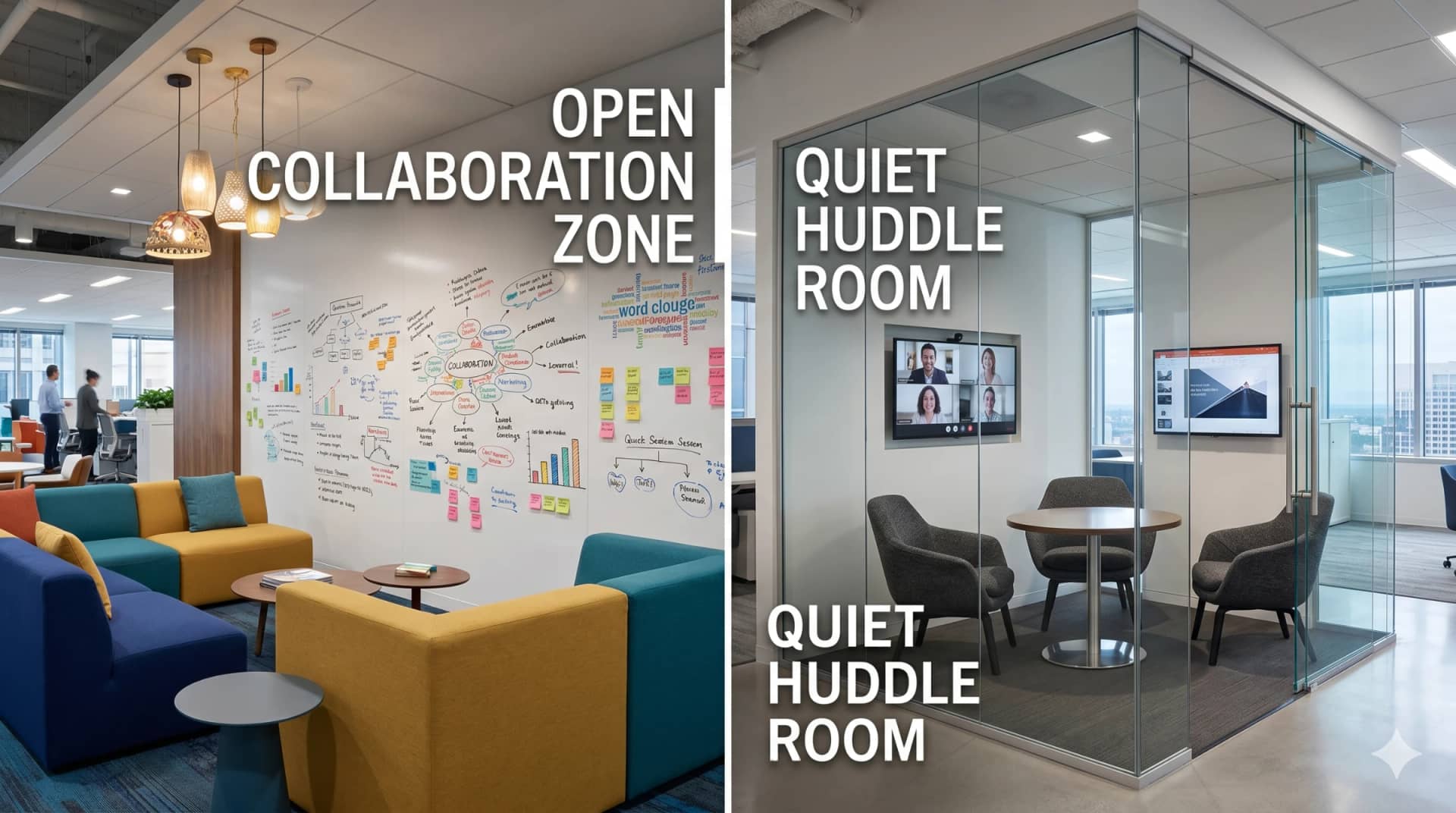
An office that is too loud destroys focus; an office that is too quiet kills creativity. Compare the energy of Open Collaboration Zones against the silent sanctuary of Private Huddle Rooms with ETCBangladesh to build a perfectly balanced workplace.
Read next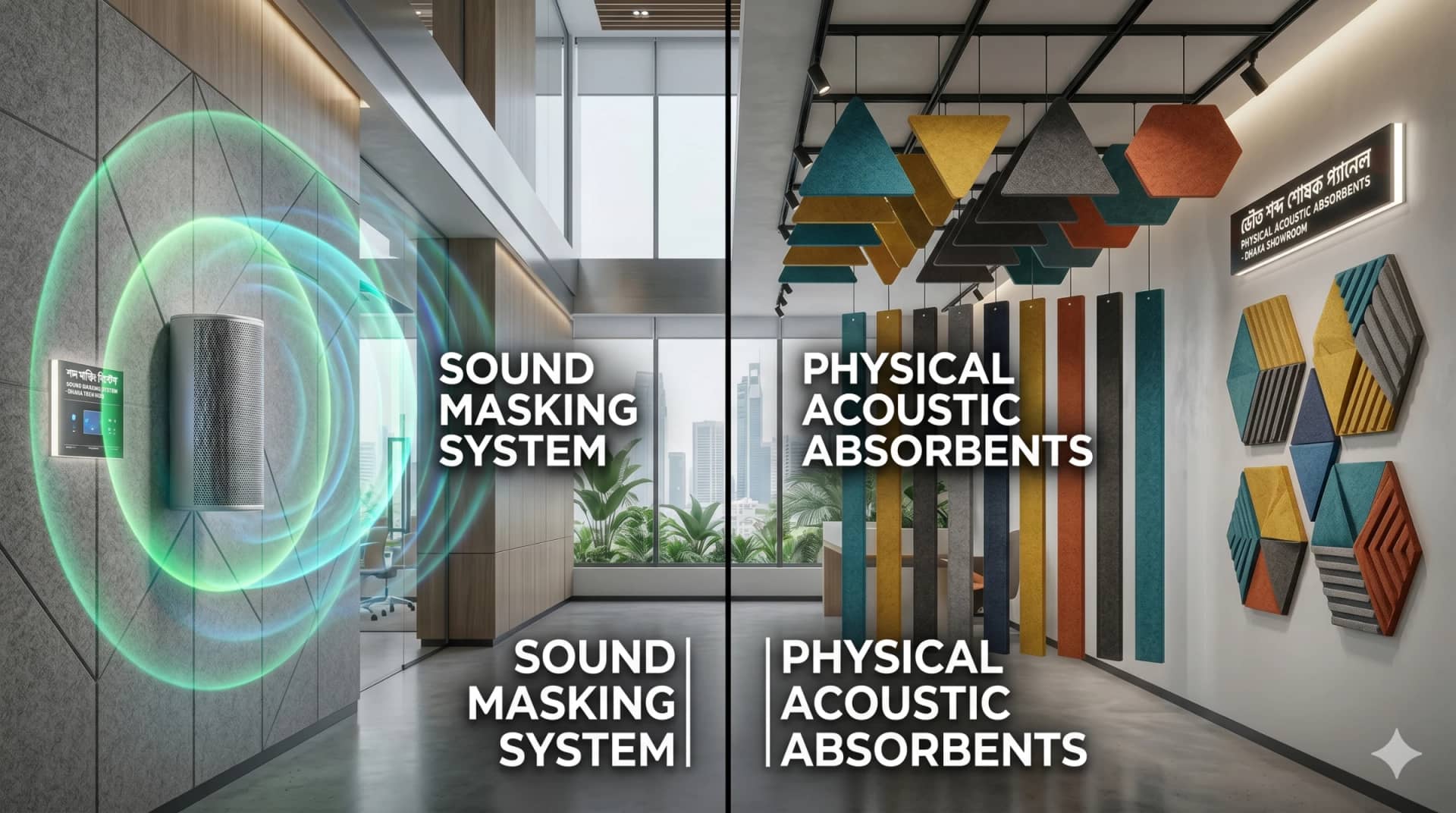
Open-plan layouts in Dhaka are suffering from a noise crisis that destroys concentration. Compare the engineering logic of Sound Masking Systems (Digital White Noise) against traditional Physical Acoustic Panels and Baffles with ETCBangladesh to build a silent, high-performance office.
Read next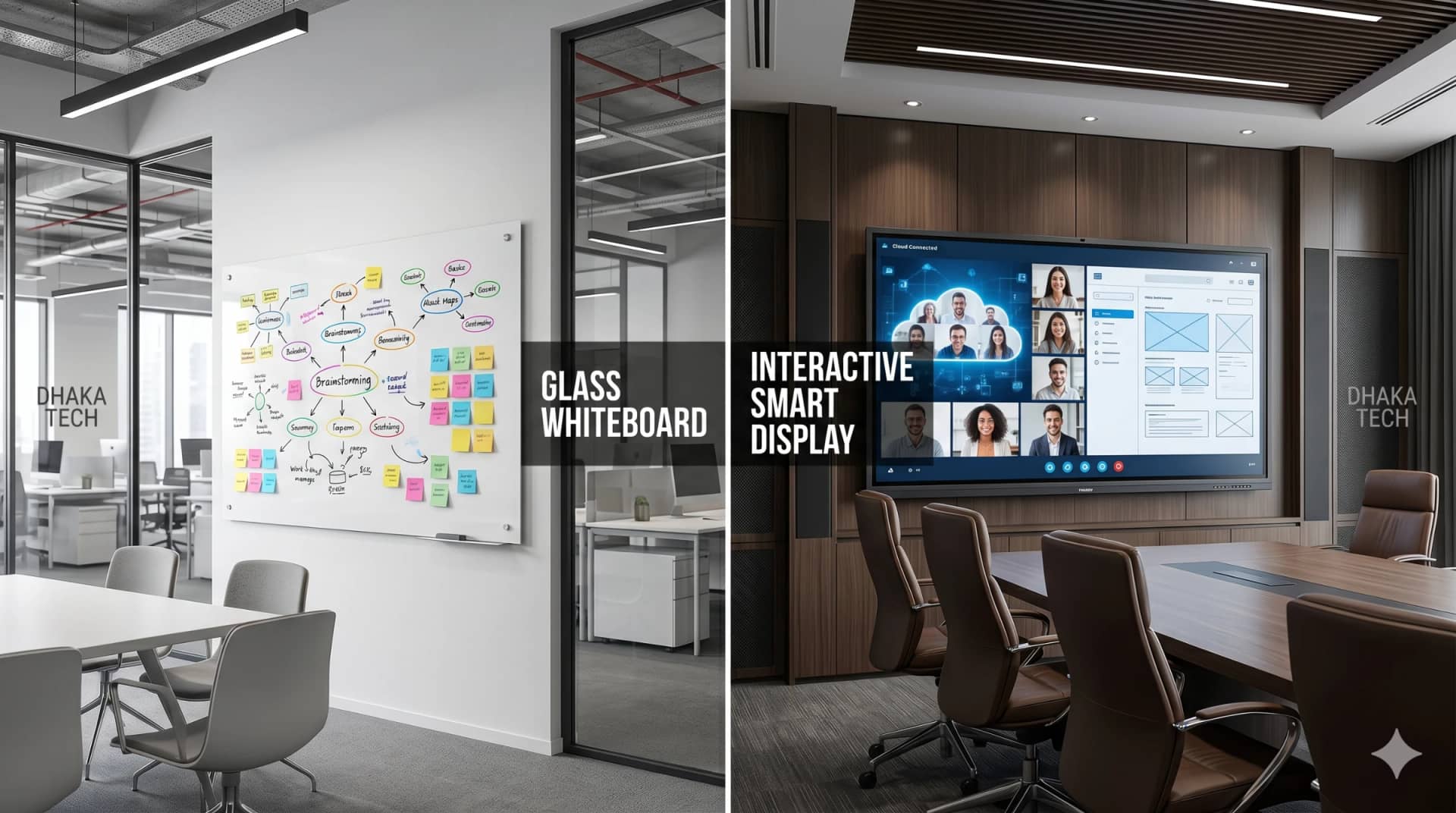
Is your team better served by a low-friction analog writing canvas or a high-tech, cloud-connected interactive screen? Compare the functionality, upfront capital, and hybrid integration of Glass Whiteboards versus Interactive Smart Displays with ETCBangladesh.
Read next