

Commercial HVAC, Solar Energy & Fit-Out Solutions
Commercial HVAC, Solar Energy & Fit-Out Solutions
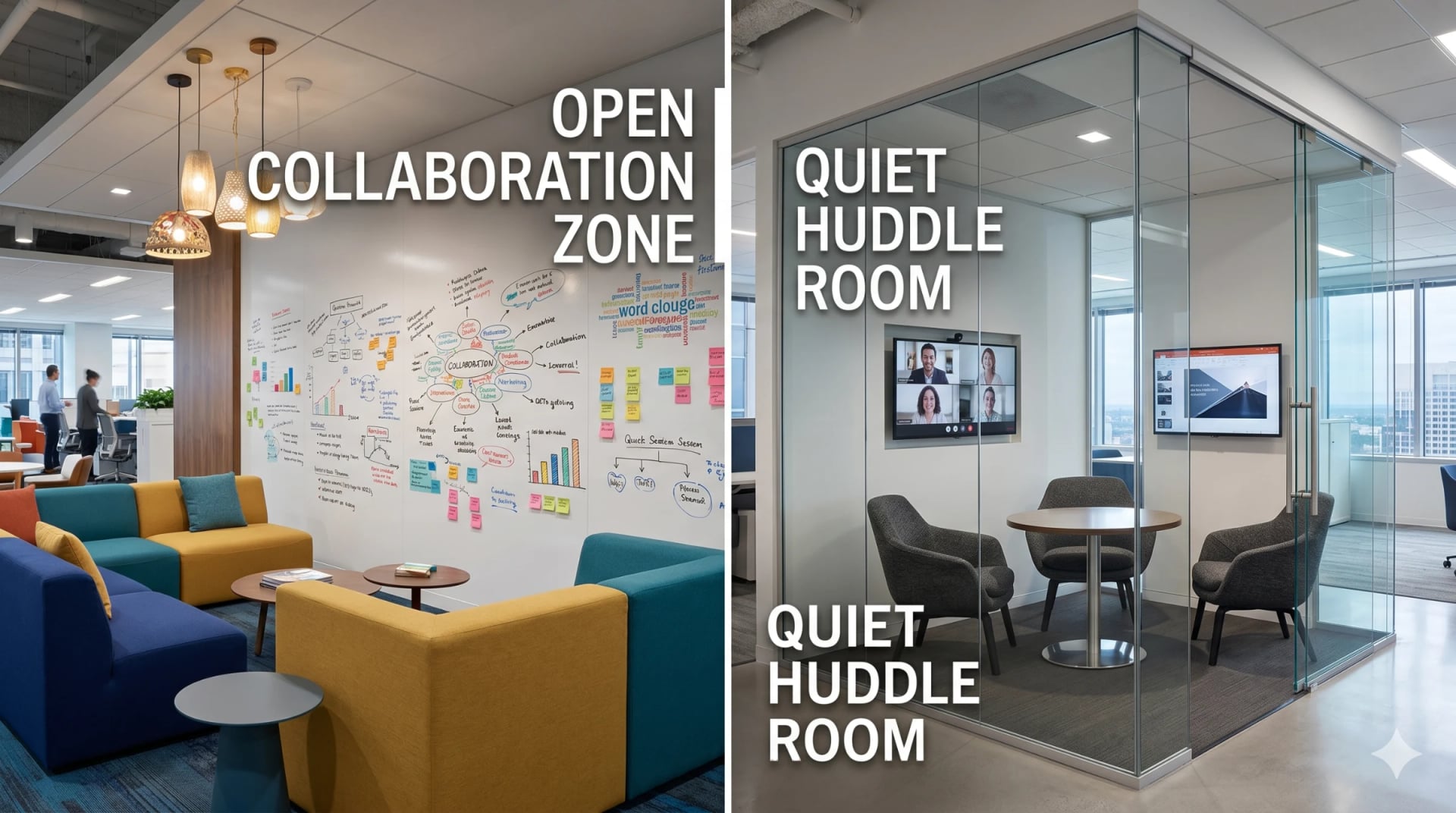
An office that is too loud destroys focus; an office that is too quiet kills creativity. Compare the energy of Open Collaboration Zones against the silent sanctuary of Private Huddle Rooms with ETCBangladesh to build a perfectly balanced workplace.
When designing a premium corporate floor plate in Dhaka’s top commercial zones like Gulshan, Banani, or Uttara, business owners face a major cultural challenge. The modern workforce thrives on instant communication and creative brainstorming, but it also desperately requires quiet moments of isolated deep focus to execute high-value technical tasks.
If you build an office entirely made of open desks, the continuous noise will tank your team's mental focus. Conversely, if you lock everyone away in traditional, isolated cubicles, you crush the organic team synergy that sparks your next big corporate breakthrough.
The secret to a high-performance floor plan lies in Activity-Based Zoning. This layout framework sets up a dynamic balance between two critical areas: Open Collaboration Zones and Private Huddle Rooms. At ETCBangladesh, we look at your staff's daily communication workflows to design a self-balancing spatial layout.
Open collaboration zones—as visually labeled on the left side of our design guide—are casual, unassigned spatial hubs strategically carved out of your main open-plan office layout.
The primary design goal of a collaboration zone is to remove friction from teamwork. Instead of forcing employees to book a formal, intimidating boardroom just to review a quick graphic layout or pitch deck, they can simply pivot to a casual sofa lounge or a high-table cluster.
Equipped with floor-to-ceiling magnetic whiteboard walls, mobile presentation displays, and interactive pin-up boards, these zones serve as an active sandbox for creative design sprints, morning stand-up syncs, and spontaneous inter-departmental ideas.
Because these zones utilize modular, lightweight furniture (such as configurable geometric ottomans or moving castor-wheeled desks), the space can be rearranged by your team in under a minute to match any group size. Visually, having an active, lively collaboration hub near the center of your floor plan injects an immediate sense of progressive energy and modern brand vitality that leaves a lasting impression on visiting clients.
Quiet huddle rooms—visually labeled on the right side of our design guide—are compact, fully enclosed, 2-to-4-person meeting spaces engineered specifically for sound isolation and high-concentration tasks.
Where open collaboration zones welcome noise, huddle rooms act as your office's acoustic safety valves. If an account manager needs to jump on an unexpected, confidential video call with a foreign client, or a software engineer needs absolute silence to debug a critical piece of code, they step directly into a huddle room.
These spaces are lined with high-STC double-glazed glass partitions and fabric acoustic wall panels to ensure that conversations stay perfectly inside, keeping the main outside workspace quiet and focused.
From a real estate standpoint, traditional large 12-seat conference rooms are often highly underutilized—frequently occupied by just two people holding a private chat. Huddle rooms solve this spatial waste. By utilizing small, underused corners or empty alcoves (often requiring as little as 50 to 70 square feet), you can deploy multiple huddle rooms across your floor plan, drastically increasing your meeting room availability without shrinking your main workspace area.
Performance & Logistic MetricOpen Collaboration ZonesPrivate Acoustic Huddle RoomsPrimary Workplace RoleSpontaneous group brainstorming and ideationFocused private calls, deep-work shifts, and quick syncsAcoustic EnvironmentEnergetic and active (Sound carries over floor)Ultra-Quiet (Acoustically insulated and soundproof)Seating & Layout StyleCasual modular lounges, high tables, writeable wallsMinimalist task chairs, compact desks, display screensBooking RequirementNone (First-come, ad-hoc open access)High (Typically integrated with digital room-booking apps)Real Estate StrategyMulti-purpose use of open-plan floor spaceMaximizes small, irregular corners and dead zonesAverage Occupancy Line4 to 12+ Employees simultaneouslyHighly optimized for 1 to 4 People max
To build a highly efficient, future-proof workspace, ETCBangladesh utilizes a calculated spatial separation layout built around acoustic buffering:
The Zoning Rule: Never position an open collaboration zone directly adjacent to your quiet, heads-down workstation rows. The creative buzz will continuously disrupt your focused employees.
Instead, our architects implement a buffer gradient. We place high-energy open collaboration zones and social pantries at one end of the floor plate. We then position structural banks of quiet acoustic huddle rooms right in the middle. These huddle rooms act as a physical and auditory sound barrier, absorbing noise and protecting the quiet focus wings located at the far opposite end of the building.
Balancing human energy with acoustic comfort requires a deep understanding of spatial psychology, precise layout drafting, and advanced material handling.
At ETCBangladesh, our commercial interior design division blends detailed acoustic mapping and workflow simulations with premium furniture procurement and expert on-site construction. We convert empty commercial shells into high-performance corporate assets optimized to unlock your team's true potential. Contact ETCBangladesh today to evaluate your current floor plan and design an interior engineered for long-term operational success.
Continue Reading
Keep the reading flow going without dropping straight into the footer.
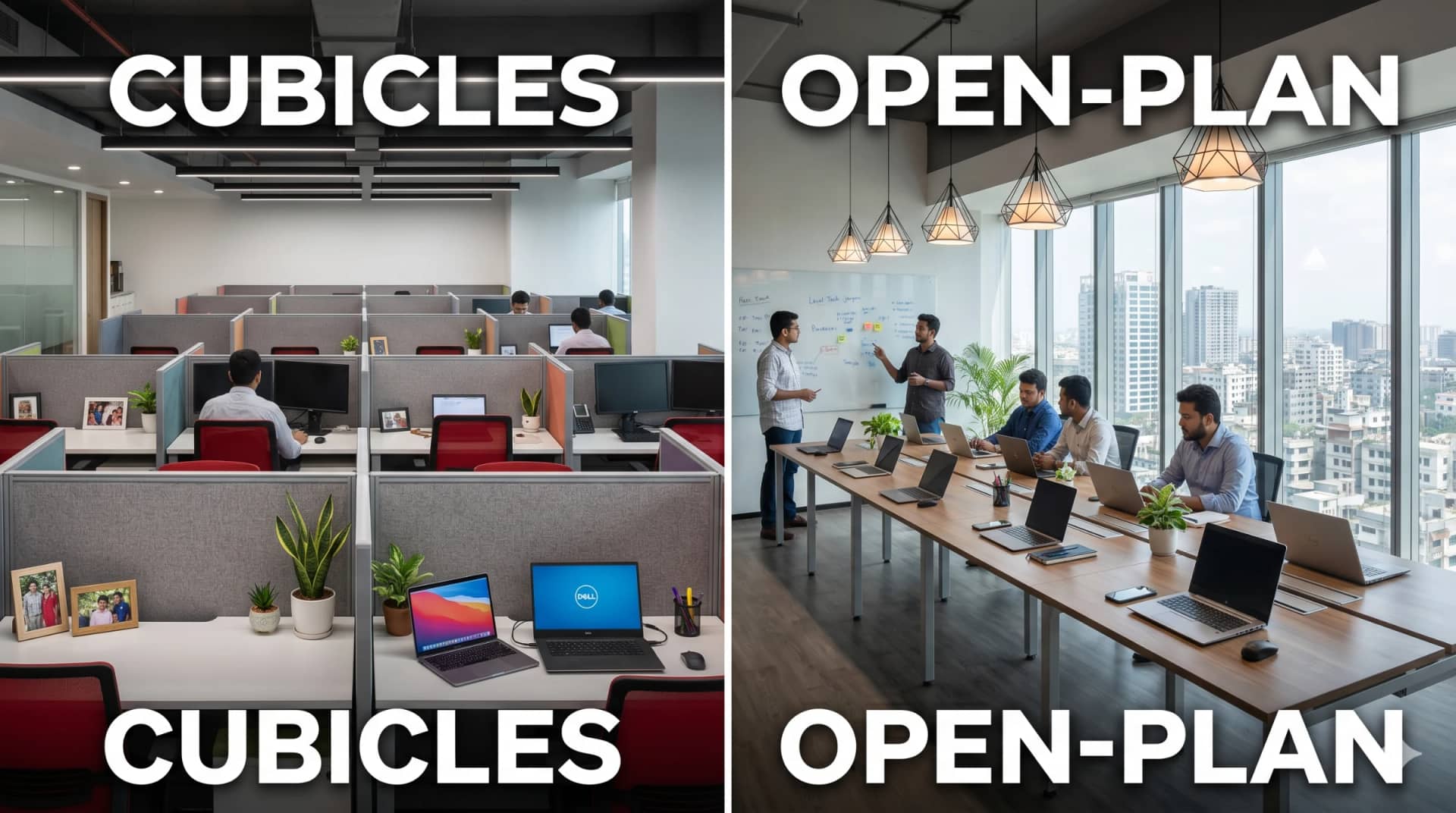
The fundamental debate of modern office design: visual focus versus collaborative energy. Compare the concentrated privacy of traditional Cubicle Workstations against the synergistic dynamic of Open-Plan configurations with ETCBangladesh.
Read next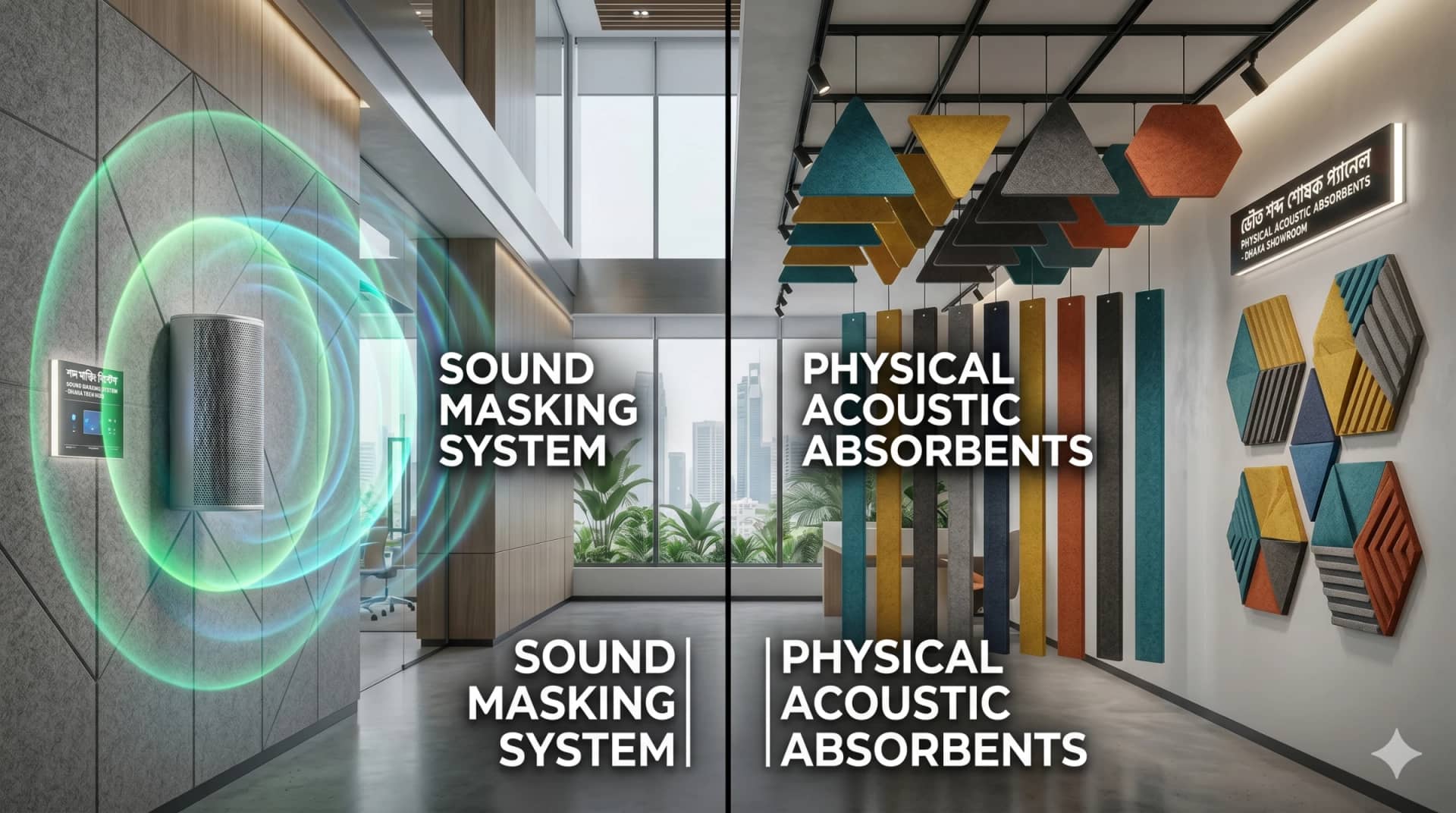
Open-plan layouts in Dhaka are suffering from a noise crisis that destroys concentration. Compare the engineering logic of Sound Masking Systems (Digital White Noise) against traditional Physical Acoustic Panels and Baffles with ETCBangladesh to build a silent, high-performance office.
Read next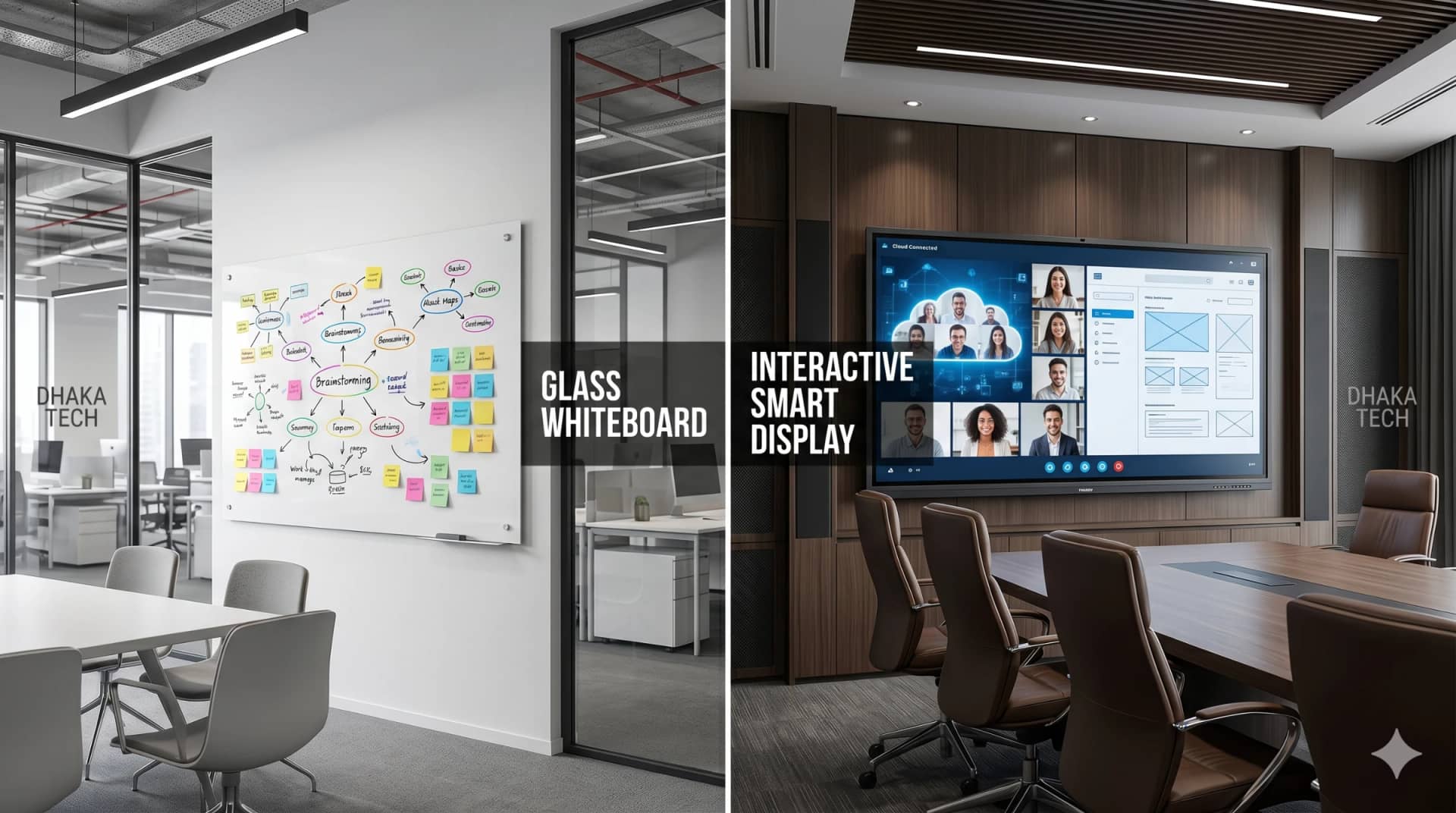
Is your team better served by a low-friction analog writing canvas or a high-tech, cloud-connected interactive screen? Compare the functionality, upfront capital, and hybrid integration of Glass Whiteboards versus Interactive Smart Displays with ETCBangladesh.
Read next